

HSE Researchers Assess Creative Industry Losses from Use of GenAI
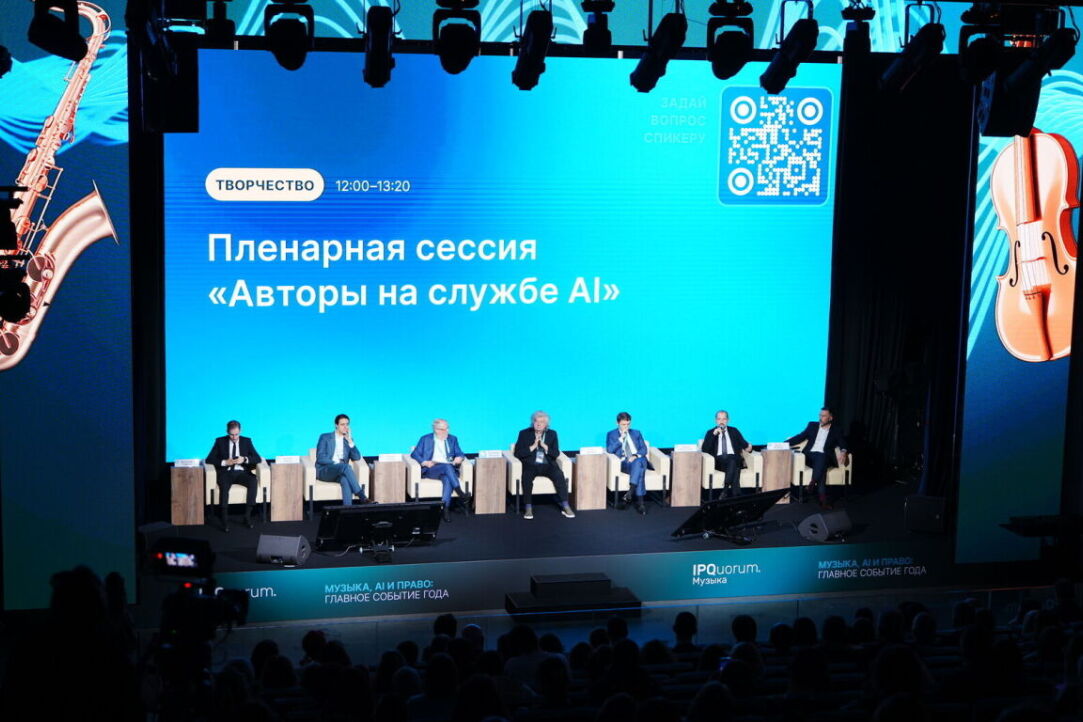
Speaking at the IPQuorum.Music forum on October 15, Leonid Gokhberg, HSE First Vice Rector, and Daniil Kudrin, an expert at the Centre for Industry and Corporate Projects of HSE ISSEK, presented the findings of the first study in Russia on the economic impact of GenAI on creative professions. The analysis shows that creators’ potential losses could reach one trillion roubles by 2030.
The pace of technological innovation is accelerating every year: while it took the telephone 75 years to 'take over the world,' DeepSeek reached 100 million users in just two weeks. Today, GenAI models are rapidly gaining popularity, enabling users to generate text, video, images, and audio. There are now at least 1,000 AI models on the market designed for creative tasks and capable of competing with human creators.
Experts at HSE ISSEK have developed a unique methodology for quantifying the losses faced by authors and copyright holders as a result of the adoption of AI. The study focuses on 12 creative professions that are most vulnerable to GenAI. For the first time, researchers have estimated the share of generative content in different types of creative work and assessed the income decline experienced by 'traditional' creators who do not use neural networks. Notably, the study deliberately excludes the potential positive effects of AI, such as increased productivity and reduced barriers to entry.
The findings indicate that total income losses for members of creative professions could reach 1 trillion roubles by 2030. Programmers and developers, as well as advertising and marketing specialists, are expected to be hit the hardest. Generative models have brought new players into the creative industries, including both institutional actors—such as IT companies, developers, and digital platforms—and individuals, such as amateur creators. The production and distribution of AI-generated content by these new players pose a serious threat to the revenues of writers, translators, journalists, and composers: according to experts, AI penetration in these professions will exceed 25%.
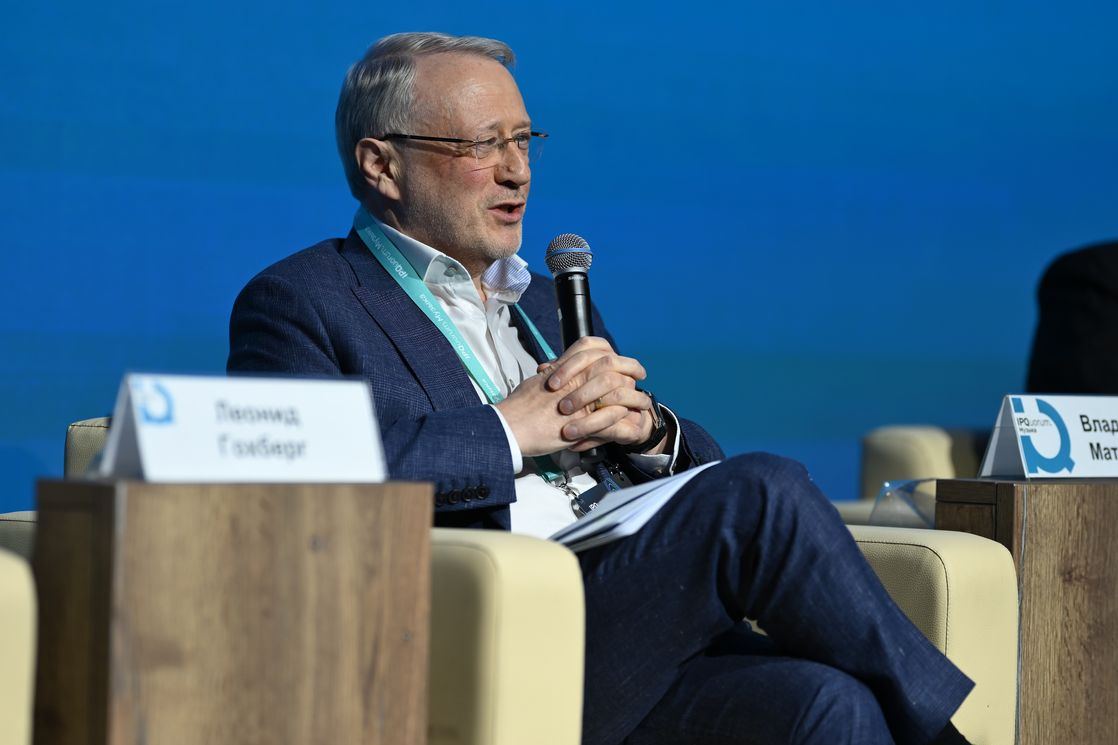
'We live in an era of exponential digital development,' says Leonid Gokhberg, First Vice Rector of HSE University. 'Innovation cannot be stopped, but it is crucial to foster a balanced dialogue between creators, technology companies, and the government. GenAI should not become a threat to creative professions. Rather, it should be viewed as a tool that complements human imagination, not replaces it.'
The researchers emphasise that current AI solutions are still far from fully replacing humans, as generative models are prone to 'hallucinations' and errors, and can pose reputational risks. In practice, AI often serves as an assistant, helping creators with editing, reference selection, translation, and technical problem-solving.
The HSE ISSEK study represents the first step toward a systematic analysis of GenAI’s impact on the intellectual property market and toward developing solutions that balance innovation with the protection of creators’ interests.
A full recording of the plenary session 'Authors in the Service of AI' is available here.

See also:

HSE Computer Science Researchers Win Gold Medal at International Machine Learning Competition
A team comprising HSE International Laboratory of Statistical and Computational Genomics researchers Aleksei Shmelev and Nikita Chervov, 2025 graduate of the HSE Faculty of Computer Science’s Master’s programme in Data Analysis in Biology and Medicine Ivan Gevorkov, and two students from the United States achieved an outstanding result at the 2026 NeuroGolf international machine learning championship. The team won a gold medal and placed seventh overall.
‘Working with AI Solves a Wide Range of Engineering Problems’
Artificial intelligence is a working tool based on a balanced combination of algorithms and engineering. Experts and doctoral students from the HSE Moscow Institute of Electronics and Mathematics explain how AI technologies can improve an application, device, or system, and what engineering tasks are solved in the process.
‘The Peak of Stupidity’ and ‘The Valley of Despair’: HSE Economists Propose an Explanation for the Dunning–Kruger Effect
The Dunning–Kruger effect, which describes a sharp surge in self-confidence among beginners followed by an equally rapid decline as they gain experience, can be explained by the nature of the learning process and the acquisition of new knowledge. This conclusion was reached by Andrey Vorchik of the HSE Faculty of Economic Sciences together with independent researcher Murat Mamyshev. They developed a mathematical model of learning and demonstrated how subjective confidence is formed and changes as knowledge accumulates, as well as how teachers can reduce the ‘valley of despair’ experienced by learners.
Advancing Collaboration: HSE Faculty of Computer Science and Harbin Institute of Technology Hold Joint Seminar
From July 13 to 16, 2026, the Faculty of Computer Science hosted the Russian–Sino Research Seminar on Machine Learning Applications, organised by the HSE Laboratory for Cloud and Mobile Technologies in partnership with the Harbin Institute of Technology (China). A delegation comprising seven students and three university representatives travelled to Moscow to take part in an intensive four-day programme.
A New Section on AI and a Prizewinning Paper: Early-Career HSE Researchers Take Part in IEEE EDM Conference
The 27th IEEE International Conference of Young Professionals in Electron Devices and Materials (EDM) has taken place in the Altai Republic. This year, researchers from HSE University presented the results of their research and were involved in organising a new section on artificial intelligence. A paper by HSE master’s student Rodion Sidorenko was awarded third place in the research paper competition at the conference.
‘AI Enables Researchers to Tackle More Complex and Important Problems’
In late July 2026, Dmitry Rybin, a graduate of the HSE Faculty of Mathematics who is now working in China, used ChatGPT to disprove a longstanding mathematical hypothesis. In an interview with the HSE News Service, he discussed AI's ability to make discoveries in mathematics, reflected on his time at HSE University, and spoke about his doctoral research at the Chinese University of Hong Kong.
HSE Initiates Development of Ethical Standard for Anthropomorphic Robots
Beyond technological solutions, the development of anthropomorphic robotics also demands ethical ones. In July 2026, the HSE Institute for Robotics Systems hosted a foresight session dedicated to developing an Ethical Standard for Anthropomorphic Robotic Complexes. Representatives from businesses, government bodies, scientific organisations, and universities gathered to discuss key ethical and legal issues surrounding the development of anthropomorphic robotic complexes. The main outcome of the meeting was a draft of the Ethical Standard.
Physicists at HSE University and FIAN Discover Way to 'Photograph' Sound for Testing Materials Used in 6G Communications
Researchers at HSE University, in collaboration with colleagues from the Lebedev Physical Institute of the Russian Academy of Sciences (FIAN), have developed a method for rapidly determining how firmly a film is bonded to a substrate. This is important for the creation of ultrahigh-frequency acoustic filters, which are key components of next-generation 5G and 6G communications. For the first time, researchers have succeeded in measuring the lateral rigidity of the bond between a two-dimensional material film and a substrate in this way. The study results have been published in Applied Physics Letters.
AI for Doctors: HSE Faculty of Computer Science Delivers Course for Russian University of Medicine Students
In June 2026, the HSE Faculty of Computer Science (FCS) completed a course on the use of artificial intelligence in medicine for first-year Paediatrics students at the Russian University of Medicine. The course was delivered with support from a grant awarded to HSE University under the Artificial Intelligence federal project, part of the national project ‘Data Economy and the Digital Transformation of the State.’
HSE University to Launch New AI Supercomputer
HSE University is preparing to launch its second supercomputer. The new cluster will be primarily dedicated to artificial intelligence (AI) workloads and will complement the existing cHARISMa supercomputer. It is scheduled to become operational by the end of 2026.